
The plumber says, "I can get there sometime Tuesday." The tenant hears a firm appointment. The landlord hears a full-day window. The technician reaches the building, cannot get through the outside door, and starts calling everybody at once.
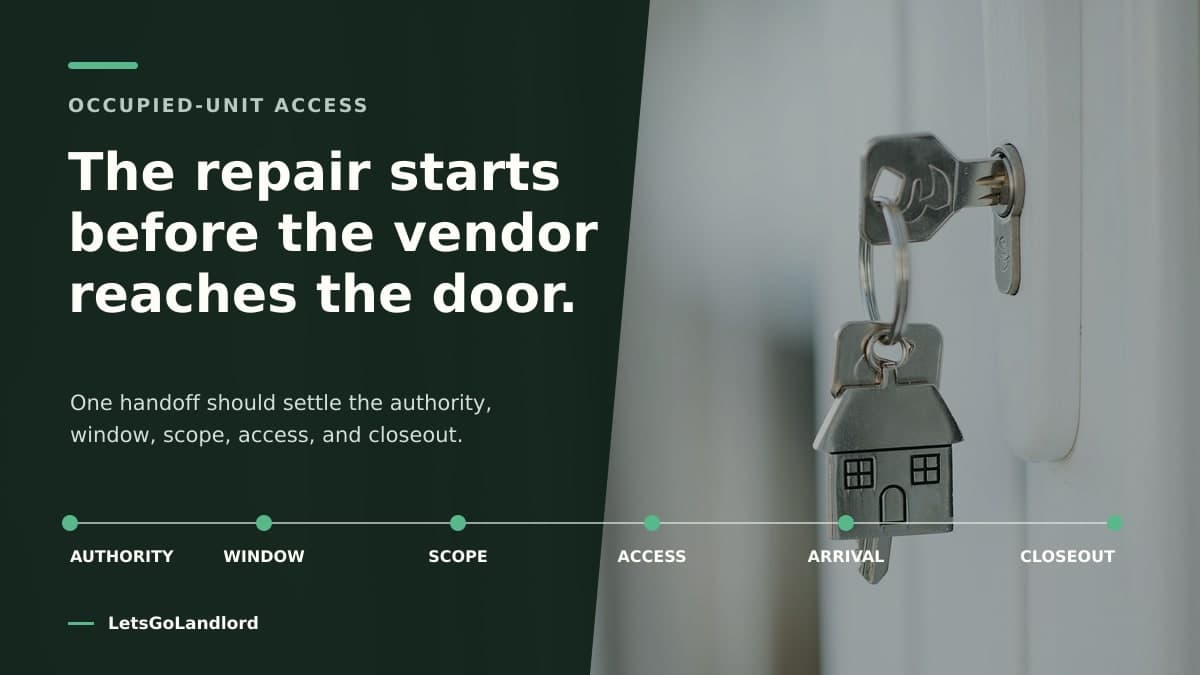
Vendor access fails in the handoff more often than in the repair. Before anyone drives to an occupied rental, put the authority to enter, appointment window, work scope, access method, tenant contact plan, and closeout step in one record. The vendor should know how to enter and what to do. The tenant should know who is coming and when.
Confirm the right to enter before scheduling
Start with the lease, the tenant's response, and the current rules that apply to the property. Confirm why entry is needed, who may enter, what notice or consent is required, how it must be delivered, and whether an emergency changes the process. A vendor saying they are available does not create authority to enter.
Keep the tenant's agreement separate from a notice you are entitled to give. If the tenant agrees to Tuesday morning by text, save that response. If formal notice is required, use the correct method and timing instead of treating a casual scheduling message as a substitute. If the work becomes urgent, record what changed and why the response changed with it.
This article provides general operating information, not legal advice. Entry rights, notice, consent, emergencies, locks, and tenant privacy depend on the lease and current state and local law. Check the requirements for the property and use a qualified local professional when the correct process is unclear.
Turn availability into a real appointment
Get a window the vendor can honestly keep. "Morning" is not useful when the tenant has to arrange work, secure a pet, or move belongings. Ask for an arrival range, expected time in the unit, who will attend, and how delays will be reported. Then send the tenant the same window rather than a more confident version of it.
Name a contact for the appointment. Decide whether the vendor calls the landlord, tenant, building contact, or somebody else on arrival. Give that person the vendor's name and company, but avoid sharing a tenant's phone number until there is a valid need and an appropriate basis to do so. A three-way group text is convenient only when everyone expects it.
Set a delay rule. For example, the vendor calls if arrival will be more than 30 minutes outside the window, and the landlord updates the tenant immediately. Do not leave the vendor to negotiate a new entry time from the curb unless that arrangement was agreed in advance.
Give the vendor a brief that works at the door
Send the service address, unit label, reported problem, approved scope, useful photos, authorization limit, and any known shutoff or equipment location. Include the tenant's description in their own words when it helps. Do not turn a symptom into a confident diagnosis that nobody has verified.
Mark boundaries clearly. Say which rooms or equipment are included, whether the vendor may open a wall or cabinet, who can approve added work, and what must wait for another decision. If the request is for a leaking kitchen sink, access to a home office or bedroom should not be implied.
Tell the vendor what proof should come back: arrival and departure time, work performed, parts used, before and after photos where appropriate, test result, open issue, and invoice. Ask the vendor not to photograph personal papers, faces, valuables, or unrelated rooms. The completion record should explain the repair without becoming a tour of the tenant's home.
Use the least complicated access method
Choose one access method and write it down. The tenant may be present, the landlord may meet the vendor, a building contact may provide access, or a time-limited code or controlled key handoff may be appropriate. The choice should fit the property, the agreement, the work, and the rules that apply.
Do not put permanent door codes, lockbox combinations, alarm credentials, or key locations in a broad message thread. Share only what the assigned person needs, as close to the appointment as practical, through a controlled channel. Change temporary codes and retrieve borrowed keys when the visit ends. Record that they were revoked or returned without copying the secret into the ticket.
Plan for the outside door, elevator, parking, utility room, and any secondary lock between the street and the work area. A unit key is useless if the technician cannot enter the building. For common areas or association-controlled spaces, confirm who can authorize and provide that access before the appointment.
Respect the fact that this is somebody's home
Tell the tenant what preparation is actually needed. Ask for a clear path to the work area, access to the affected cabinet or equipment, and safe handling of pets. Do not ask the tenant to move heavy appliances, expose wiring, climb, remove panels, or perform risky troubleshooting for the vendor.
The person who enters should identify themselves, stay within the approved work area, and avoid commenting on unrelated conditions or belongings. If a new problem is discovered elsewhere, document it and return through the proper access process unless immediate safety requires a different response.
Have a rule for unattended entry. Decide whether the vendor may work alone, whether another person must remain, and how the unit will be secured when they leave. The vendor should never assume a tenant's child, guest, or neighbor can authorize a change to the work or access plan.
Close the visit before everyone moves on
Ask the vendor to report arrival, any scope change, completion, and departure. At departure, confirm the door and any common entrance are secured, temporary access has been disabled, borrowed keys are accounted for, tools and debris are removed, and utilities or appliances are left in the intended state.
Send the tenant a short update. State what was done, whether normal use can resume, what remains open, and when the next contact will happen. If the repair needs a return visit, do not call the ticket complete. Start the next access handoff while the vendor's schedule and the tenant's availability are still fresh.
Verify the repair against the original symptom when that can be done safely. Run the fixture, cycle the appliance, inspect the repaired area, or schedule the condition that will prove the result. Keep specialized gas, electrical, structural, fire-safety, and similar testing with qualified people.
Keep the access trail with the repair
The final record should show the request, authority or notice basis, agreed window, assigned vendor, access method, arrival and departure, work performed, photos, tenant update, cost, and next action. Leave secrets out. The record needs to prove the handoff happened, not preserve a code somebody could reuse.
LetsGoLandlord keeps photos, timestamps, status changes, and updates in one maintenance ticket timeline. Record the confirmed appointment and access plan as an update, then add the vendor's completion evidence and the tenant-facing closeout to the same ticket. The software keeps the history together. It does not decide whether entry is lawful or whether a vendor should receive a key.
Review failed visits instead of treating them as bad luck. If the vendor reached the wrong entrance, the tenant received a different window, or nobody reclaimed the key, change the handoff template. One corrected field can prevent the same missed appointment at every unit that follows.