The water-heater flush is on one calendar, the HVAC filter size is in a text thread, and the gutter reminder belongs to a property that was sold last year. Nothing is technically missing, yet the maintenance plan cannot tell you what is due at 14 Cedar or who needs access to Unit 3.
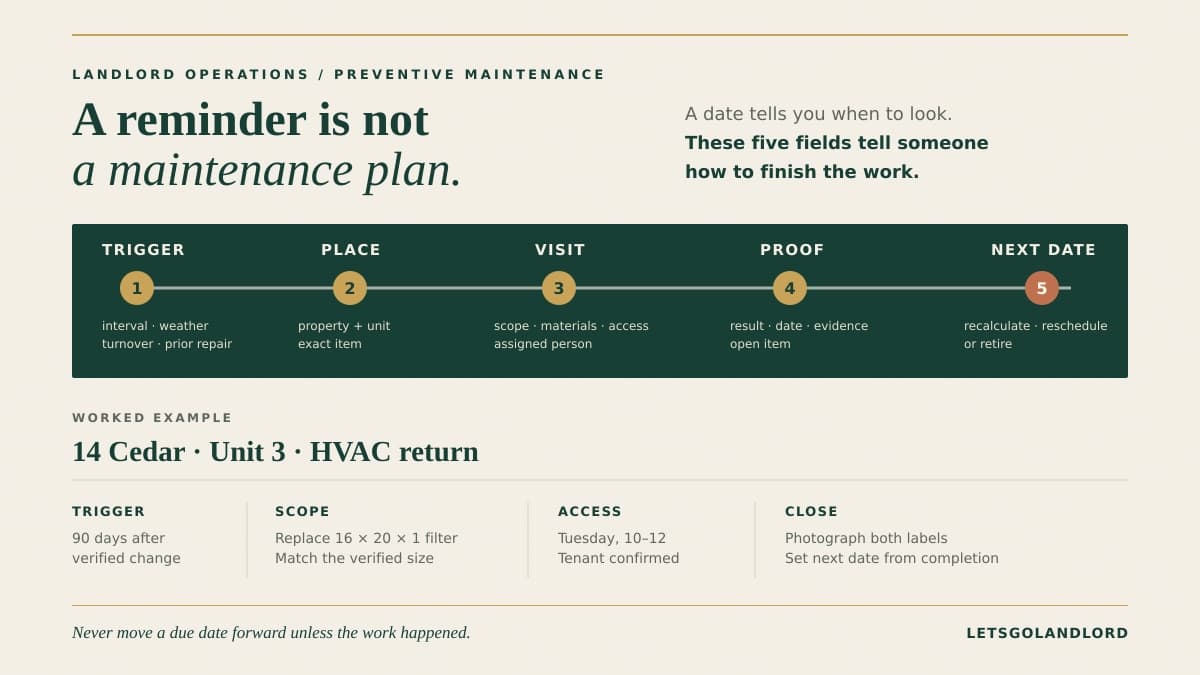
Build the calendar from the property outward. Every recurring task needs a trigger, a property and unit, a safe scope, an access plan, completion proof, and a next due date. A date by itself is only a reminder. The rest of the record is what lets somebody finish the work correctly.
Start with the equipment and the building
Walk through each property record and list the systems, equipment, and building parts that need recurring attention. Include landlord-supplied HVAC equipment, water heaters, pumps, filters, gutters, drains, roofs, exterior seals, common-area lighting, safety equipment, and any property-specific component that has a service interval.
Record the verified facts that affect the task: location, model, filter or part size, fuel or power type, installation date if known, warranty terms, shutoff location, and the last completed service. Do not copy an interval from another property just because the equipment looks similar. Use the manufacturer's current instructions and qualified local guidance for the actual model and installation.
Separate equipment service from general observation. A licensed technician's inspection, a filter replacement, and a quick visual check are different tasks with different qualifications and evidence. Combining them under a label such as "HVAC maintenance" makes the calendar look complete while hiding what anyone is expected to do.
Give every task a real trigger
Some tasks belong to a fixed interval. Others depend on weather, occupancy, equipment use, a turnover, a prior repair, or a manufacturer's service schedule. Write the trigger beside the task. "Every six months" and "before the first freeze" can land on the same calendar, but they should not be treated as the same kind of deadline.
Use the last verified completion date to calculate the next date when the interval is time-based. If the last service is unknown, label it unknown and schedule an initial assessment. Do not invent a past completion date to make the series look tidy.
Add condition-based follow-ups after work that needs another look. A roof repair may need a check after the next heavy rain. A moisture issue may need a reading after the area has dried. A new appliance may need a warranty registration date. Put the condition and the fallback date in the task so the follow-up does not depend on memory.
Group work by access and route
A maintenance calendar becomes expensive when every task creates a separate trip. Group compatible work by property, building area, vendor trade, and access requirement. A common-area lighting check can share a visit with an exterior walk. Occupied-unit work may share one agreed appointment only when the scope, notice, and access plan cover every included task.
Keep the route practical. Give each visit an address, unit list, expected duration, materials, assigned person, and stop rule. Check that replacement filters, batteries, labels, keys, and protective equipment are ready before anyone drives. Do not use route efficiency to squeeze urgent or specialized work into an unsuitable visit.
Confirm occupied-unit entry separately. State who is coming, the arrival window, the approved work areas, pet or alarm instructions, and how delays will be reported. Permanent codes, lockbox combinations, alarm credentials, and reusable key locations should stay out of a broadly shared calendar entry.
Write a task that can be closed
Each task should name the item, location, work to perform, person or qualification required, materials, safe completion check, and evidence to return. "14 Cedar, Unit 3: replace 16 x 20 x 1 return filter; photograph the old and new filter labels; record completion date" is assignable. "Change filters" is not.
Use evidence that fits the work. A completion record may need a dated note, model or part number, meter reading, service report, invoice, or focused before-and-after photo. Keep faces, personal papers, valuables, and unrelated rooms out of photographs. A photo proves only what it shows, so do not use it as a substitute for testing that requires a qualified person.
LetsGoLandlord tasks can be assigned to a property, given a due date, and marked complete. Use the task description for the verified scope and access plan, then put the result in the property or maintenance record that should keep the longer history.
Close the task by setting the next date
Do not mark recurring work complete until the result and exceptions are recorded. Note the actual completion date, who performed the work, what was found, what changed, and any open item. If the planned task could not be completed, record the reason and next action instead of moving the due date forward as if the work happened.
Set the next due date from the completed work and its real trigger. If a technician changes the service interval, preserve the service note or manufacturer basis behind the change. If equipment is replaced, retire the old schedule and create a new one for the new model. Otherwise an obsolete reminder can keep firing long after the underlying item is gone.
Review exceptions weekly. Overdue work, repeat deferrals, missing access, unavailable parts, and tasks that repeatedly discover the same defect deserve attention before the calendar fills another month with copies of the same reminder.
Review the calendar before each season
Use a seasonal review to check the next 90 days, not to paste a generic spring or fall checklist into every property. Climate, building type, equipment, occupancy, local conditions, warranties, and prior findings should decide what belongs on the schedule. A coastal building, a northern duplex, and a high-rise unit do not need the same list.
Budget from the upcoming work. Separate predictable service from repairs that may follow an inspection. Reserve time for estimates, parts, tenant coordination, permits, or specialist availability when those apply. The calendar should make upcoming demand visible without pretending the cost or outcome is already known.
This article provides general operating information, not legal or safety advice. Inspection duties, notice and entry, required equipment, service intervals, licensing, permits, and safety procedures depend on the property, lease, manufacturer, and current local requirements. Use qualified professionals for work or decisions outside your competence.