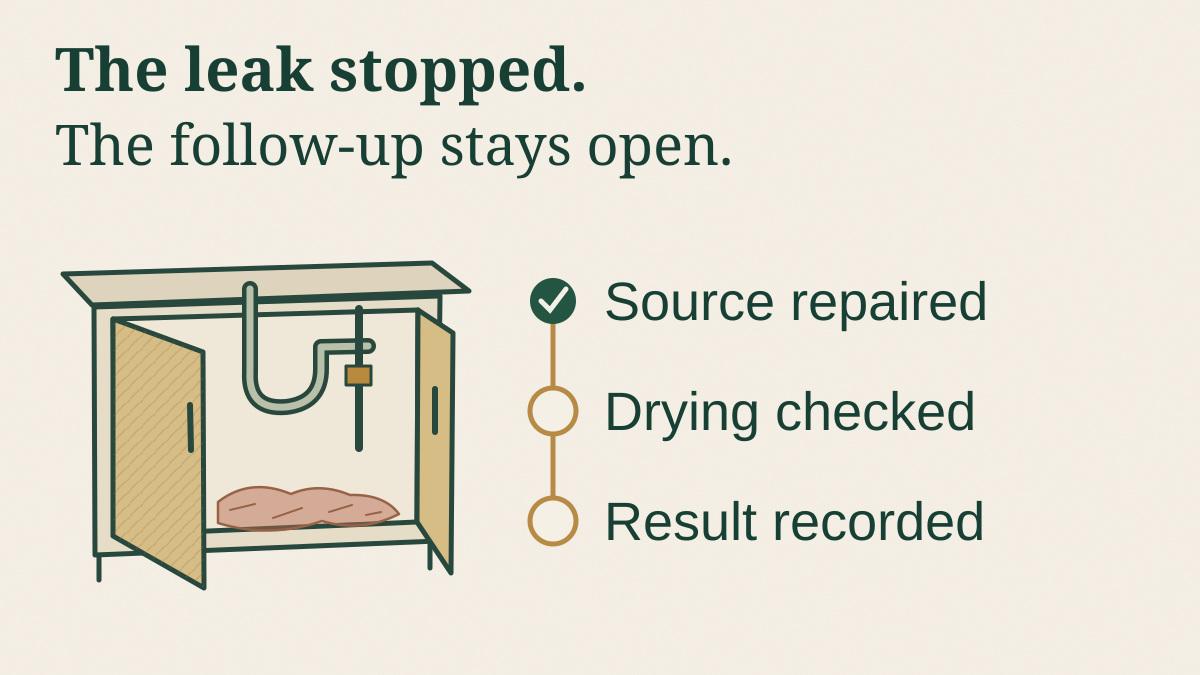
The plumber has replaced the leaking connection. The invoice is in your inbox. The cabinet floor is still damp. Closing the work order now would hide the unfinished part of the job.
Keep two questions separate: has the water source been corrected, and what still needs drying, assessment, or cleanup? A repair receipt answers what the contractor did. It does not, by itself, establish the condition of the materials around the leak. A short follow-up record keeps that distinction visible until the remaining work has been checked.
Act on the water problem before organizing the record
Arrange an appropriate prompt response to the current conditions. Active flooding, water near electrical equipment, a sagging ceiling, suspected sewage, or immediate danger calls for qualified help and emergency services where appropriate. Do not ask a tenant to touch electrical equipment, open a wall, climb into a wet ceiling space, or investigate a hazard for a better photo. Documentation must not delay protective action.
EPA's guide explains that moisture control is essential to preventing mold growth. It says that drying wet or damp materials within 24-48 hours after a leak or spill will prevent mold growth in most cases. That is prevention guidance, not a legal repair deadline, a permission to wait, or a guarantee that a space is safe. If the duration is unknown or that period has passed, arrange assessment rather than assuming the opportunity to act has ended.
Do not turn a follow-up checklist into a cleanup specification. EPA recommends experienced help for contaminated water and warns that investigating hidden mold can spread spores. Extensive damage, suspected hidden growth, uncertain materials, or health concerns need appropriate professional input. Ask the qualified provider to define the response and verification needed for the actual conditions; the landlord's job here is to keep the work from disappearing between visits.
Record the condition, not a conclusion you cannot support
Start with the property, unit, exact location, report time, and source of the information. Separate when the water was first noticed from when it was reported. Write 'duration unknown' if nobody knows. Keep the tenant's observations distinct from the contractor's findings, and preserve both if they differ.
Use precise wording: 'Tenant reports damp cabinet base below kitchen sink' is more useful than 'minor leak.' 'Plumber replaced supply connection and checked for leakage while the tap ran' is more useful than 'all fixed.' Record any remaining dampness, odor, staining, or affected material as an observation, not a diagnosis of mold, cause, or habitability.
For supporting photos, include a location view and a closer view if they can be taken safely. Date them and keep the originals. Avoid unrelated belongings, documents, and faces. A photograph can show visible change; it cannot establish that concealed material is dry or identify a mold species. Do not assign responsibility to the tenant from a stain or condensation photo alone.
Give the unfinished work its own next action
Use one compact entry: Property/unit and location: __. Reported by and received time: __. First noticed: __. Current condition: __. Source repair and supporting record: __. Drying or assessment still needed: __. Qualified provider's next action: __. Responsible contact: __. Check time agreed with provider: __. Tenant update due: __. Evidence needed before closure: __.
Ask the provider what areas and materials need attention, how progress will be checked, and what would require escalation. If measurements are part of the assessment, retain the provider's report with locations, dates, methods, and interpretation. Do not invent a universal moisture-meter reading or treat a number without material and instrument context as proof of dryness.
Set the next check according to the condition and professional guidance, not an arbitrary weekly review. Confirm who will attend and who will tell the tenant what happens next. Arrange notice and access under the lease and current local requirements. If the visit changes, update the tenant and assign a new action promptly; a calendar change does not suspend repair obligations.
For one rental, a single dated record may be enough. With several properties or staff, keep each location identifiable and give every unresolved action one named owner. A portfolio summary should point to the detailed record rather than flattening every issue into 'plumbing complete.'
A cabinet leak with two different completion points
In this fictional example, a tenant reports water below the kitchen sink. A plumber identifies and replaces a leaking supply connection, then documents the running-water check. The source repair is recorded as complete. The cabinet base is still damp, so the overall follow-up stays open while a qualified provider assesses the affected material and the drying work needed.
The owner records the provider's agreed next check and sends the tenant a factual update: 'The leaking connection has been replaced. The damp cabinet still needs follow-up. We are arranging the next assessment and will confirm the visit with you.' The message does not call the home safe, promise a drying time, or ask the tenant to carry out remediation.
At the next check, the owner adds the provider's findings and the supporting report. If the condition is unresolved or the source is uncertain, the record stays open with a revised action. Once the required work and verification are complete, retain the evidence and any recommended later check. An invoice marked paid is a payment record, not the completion standard for this process.
Close on evidence, and keep a way to report a return
EPA says the water or moisture problem must be fixed before mold cleanup or remediation can be considered finished. Its guide also calls for a return visit shortly after cleanup to look for signs of water damage or mold growth. Where mold is involved, follow the qualified provider's scope and applicable requirements; a landlord's visual glance is not a substitute for a needed assessment.
Tasks in LetsGoLandlord.com support a due date, optional due time, and notes, and can link to a property, lease, or open maintenance ticket. Use a task for the next provider check and put the responsible person's name in the note. The software does not measure moisture, diagnose mold, verify remediation, or decide whether a home is safe. Those findings belong with qualified people and their records.
Before closing the follow-up, identify the source-repair evidence, the disposition of affected materials, the provider's verification where needed, and any remaining check. Tell the tenant what was done and how to report renewed dampness, odor, or leakage promptly. Keep a later monitoring task separate if the provider recommends one; do not use it to mark unfinished corrective work complete.
After the immediate response is handled, record the actual costs and review your maintenance allowance. The linked rental ROI calculator helps test maintenance-cost assumptions in a rental's cash-flow plan. It does not estimate remediation scope or determine what work may be deferred. Keep budgeting separate from the response the property needs.
This article provides general operating information, not legal, medical, or remediation advice. Repair duties, entry, disclosure, licensing, habitability, and record retention vary by location and circumstances. Check current local requirements and obtain qualified advice for the property. Health concerns belong with a healthcare professional, not a maintenance checklist.