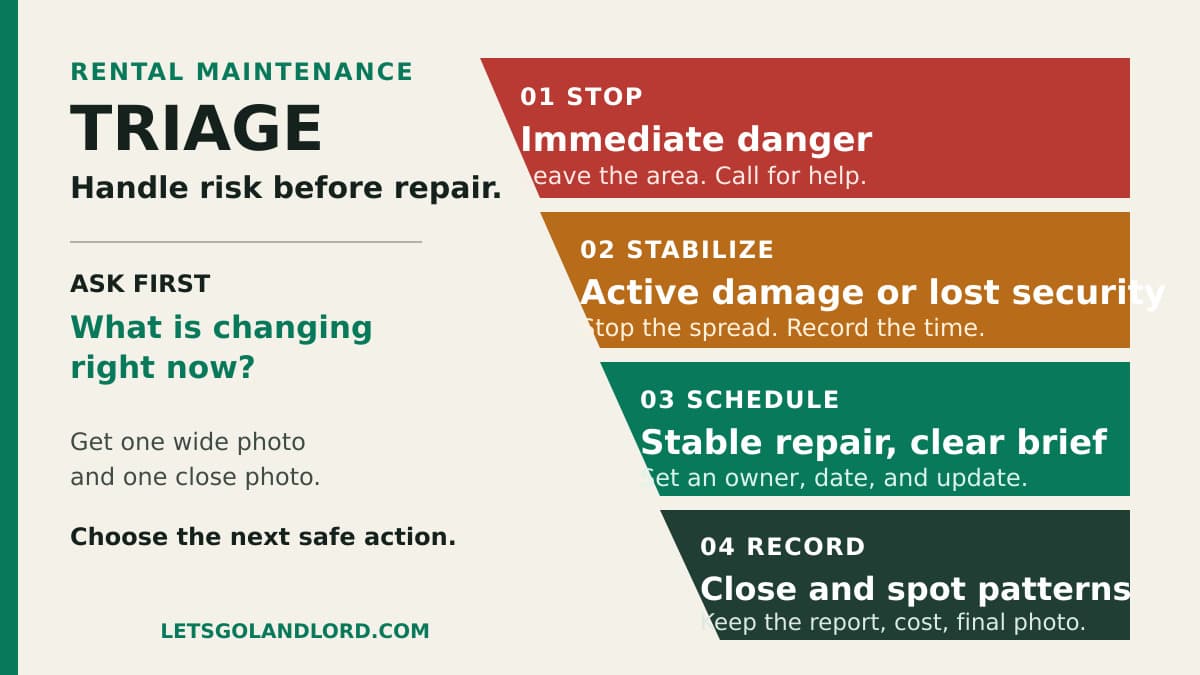
A maintenance request arrives at 8:17 p.m.: 'There is water under the sink.' The useful first question is not which plumber to call. It is whether water is still flowing, whether anyone is in danger, and what can be done right now to keep a small problem small.
Maintenance triage separates the immediate response from the final repair. You do not need a perfect diagnosis on the first call. You need enough reliable information to protect people, limit damage, and choose the next action.
Stop immediate danger
Treat fire, smoke, a suspected gas leak, electrical arcing, active flooding, structural movement, and a person trapped or injured as emergency conditions. For a suspected gas leak, occupants should leave the affected area and call emergency services or the utility provider from a safe location. Do not coach someone through a risky repair over text.
Give tenants the emergency contacts and tenant-safe controls that apply to their unit before anything breaks. Label an accessible water shutoff and any ordinary unit-level valves they can safely use. Keep gas and electrical equipment out of tenant repair instructions. A clear photo in the tenant handoff is more useful than a paragraph written during a leak.
Stabilize active damage
Once people are safe, ask what is changing right now. Is water still spreading? Is the ceiling bulging? Is a refrigerator getting warmer? Is a broken exterior door unable to latch? An issue that is actively damaging the building moves ahead of one that is annoying but stable.
Ask for one wide photo, one close photo, and a short video when movement, sound, or flow matters. Have the tenant describe what they can see without removing panels or touching exposed wiring. Record any temporary step, such as closing an accessible shutoff valve or moving belongings away from water, along with the time it happened.
Check essential service and security
Next, look for loss of an essential service or a security problem: no heat during cold weather, no running water, a failed only toilet, or an exterior door that will not secure. A failed lease-provided refrigerator also needs a prompt response because food can spoil. The practical response depends on the property, weather, household, lease, and local requirements. If you are unsure about your duty or timing, get local professional advice rather than guessing.
Keep this stage factual. 'The air conditioner is broken' is less useful than 'the thermostat is set to 74, the indoor temperature is 83, the outdoor unit is silent, and the breaker is on.' Better intake helps the right vendor arrive with the right parts.
Schedule stable repairs with a clear brief
A dripping faucet, loose cabinet hinge, torn screen, sticking interior door, or appliance problem that is stable can enter the normal queue. Give each request an owner, a target date, and a next update. 'Waiting for plumber, update tenant by Tuesday at noon' is a plan. 'Open' is only a status.
Bundle nearby work when it will not delay something important. A vendor who is already visiting can often handle two minor items, but batching should never become an excuse to leave a leak, security defect, or essential-service failure sitting in the queue.
Close the loop after the repair
Save the tenant's report, photos, vendor notes, repair cost, completion time, and a final photo in one timeline. Confirm with the tenant that the symptom is gone. If the repair exposed a larger pattern, create the follow-up while the details are fresh. Repeated clogs, recurring moisture, and breakers that trip more than once deserve investigation, not another identical patch.
LetsGoLandlord gives each unit a maintenance magic link for requests and photos. AI triage suggests priority and drafts a response, while the landlord stays in control of what gets sent and scheduled. Vendor details, updates, and the final record stay with the ticket instead of being split across texts and email.
For a major repair that changes the property's expected expenses, run the new numbers through the rental ROI calculator. The repair decision still belongs to you, but the effect on cash flow should not be hidden in a receipt folder.