The plumber replaced a supply line last month. Now the tenant reports water under the sink again. Assess the current urgency first. As you arrange the response, pull the earlier work order so the plumber has the repair history. The new report could describe a failed repair, a different leak, or something the first visit never established.
A rental maintenance recurrence log connects those records without deciding the cause. It can be a short note in a ticket or a separate worksheet. Keep the earlier report, the work performed, the result checked, and the new observation easy to find. Assess urgency first; gathering records must not delay a necessary response.
Connect the symptom, not just the room
Give the issue a working name based on the report: "Water below kitchen sink after cold tap runs." Add the property, unit, fixture, and first report date. A slow drain and a loose faucet belong in separate records unless a qualified assessment connects them. Being in the same kitchen is not enough.
When a similar condition returns, add a reference to the earlier ticket or work order. Include its date and title, plus a record ID or internal link if available. Add the new reference to the earlier record too. Keep both accounts intact; do not rewrite the first report to fit a later diagnosis.
A worked example: water under the sink
This invented example shows what to carry forward. The dates illustrate the record sequence, not an acceptable repair deadline.
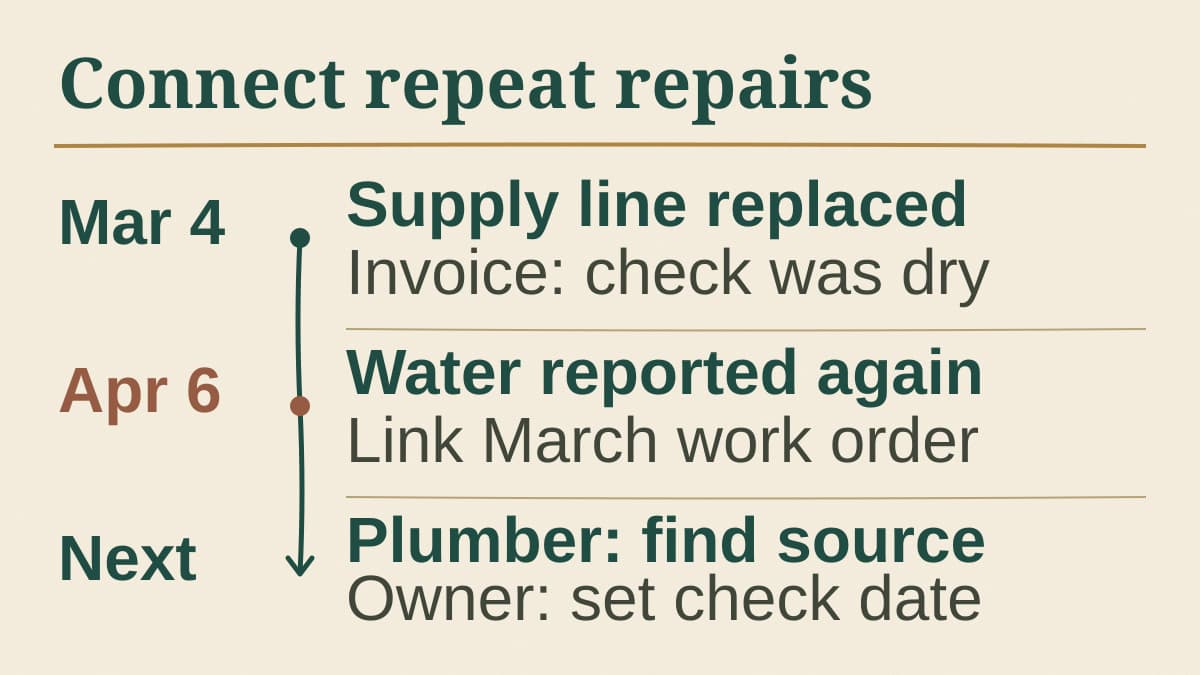
March 4, prior work: the plumber's invoice says "replaced supply line; cabinet dry during running-water check." Retain the invoice with the March work order. That records the work and the result of one check, not a promise that every possible leak was ruled out.
April 6, new report: the tenant reports water under the same sink after using the cold tap. Record when they noticed it, the current condition, and any photo supplied. Add a cross-reference in both records: "Related to March 4 kitchen-sink work order; water reported again April 6; source not yet confirmed." The same location makes the earlier work worth reviewing. It does not establish the same cause.
Next action: the landlord arranges a qualified plumber's assessment, supplies the March work order, and records the confirmed visit date. The brief asks the plumber to identify the current source and describe how the result will be checked. The landlord sets a follow-up date to review that finding and update the tenant. If the source or scope differs, add the new finding rather than changing the March entry.
Use a short entry you can fill in after each event
Copy this into your log: Event date/time: __. Source: __. Location and observed symptom: __. Related record: __. Work or finding: __. Result checked by whom, when, and how: __. Still unknown: __. Next action, owner, and due date or trigger: __.
Use a new entry for a report, visit, repair, check, or follow-up that changes what you know or what happens next. Write "not checked" or "unknown" when that is the truth. If the cabinet was dry when the vendor arrived, record that without dismissing the tenant's earlier observation.
Keep the source attached to the claim. "Tenant reports water after using the tap" and "plumber identified a leaking connection" are different kinds of information. Quote the relevant invoice wording rather than expanding "replaced supply line" into an unsupported diagnosis. Before and after photos can show a change, but may not establish its cause.
Send the next vendor the useful history
Send the current symptom, earlier work order, relevant photos, and the question you need answered. Include equipment model, prior part, and warranty information when available. Mark uncertain details for confirmation. A model number can help a technician prepare; "the appliance is worn out" needs a documented assessment.
Replace "take another look" with a specific request: identify the current source, compare it with the earlier work, and document the result of the check. A return visit or second opinion does not itself prove the first vendor made an error. If the scope expands, require approval for additional non-emergency work under your normal process.
Share only what the job needs. Crop repair photos to avoid faces, papers, medicines, and unrelated belongings. Keep reusable access codes and sensitive tenant details out of broadly shared notes. Arrange notice and entry under the requirements that apply to the property. Never ask a tenant to remove panels, touch wiring, or perform risky troubleshooting for a photo.
Keep the references in the ticket history
Maintenance tickets in LetsGoLandlord.com have a description, photos, vendor and cost fields, a scheduled date, and a timeline of notes and status updates. The detail page also shows equipment on file for the unit and property and lets you create a follow-up task with a due date. Use the note field for the related ticket's date, title, and ID or internal URL. This is a manual cross-reference, not automatic matching of recurring problems.
The timeline timestamp is when an update was added, not when the event happened. If you enter yesterday's phone report today, write yesterday's date and the source in the note. Store invoices and other supporting records in your usual filing system and reference them precisely. A ticket status or cost field does not verify the repair or prove payment.
The software does not diagnose the source, decide whether a repair is required, or verify technical work for you. Use the history to prepare the next visit and the due-date task to remember your follow-up. The finding still has to come from someone qualified to make it.
Handle urgency before paperwork
A repeat issue is not automatically an emergency, but its history is not a reason to downgrade it. Smoke, suspected gas, electrical arcing, active flooding, or structural danger require an appropriate urgent response, not a wait for the next log review. Loss of a critical service also needs prompt assessment under the conditions and requirements that apply. Do not use this article to judge whether a property is safe.
Tell the tenant what is known, what happens next, and when to expect an update. Do not promise a fix before it has been checked. If an appointment changes or the vendor cannot identify the source, say so and give the next action rather than letting the ticket go quiet.
Close with a result someone can retrace
Write what was found, what work was done, and who checked the result, when, and how. Retain the supporting work order, invoice, relevant observations, approvals, and tenant update under your record-retention process. If the planned check did not happen, say so and assign the missing check instead of marking the repair verified.
Close the recurrence review when the documented result supports closure and any remaining work has an owner and next action. "Vendor left" or "invoice paid" is not a verification note. If the symptom returns, add the new observation and cross-reference this history; do not erase the earlier result. The next vendor needs to see what held, for how long, and what changed.
This article provides general operating information, not legal or safety advice. Required repairs, emergency response, entry, privacy, licensing, permits, and record retention depend on the condition, lease, and current requirements where the property is located. Use qualified professionals for work and decisions outside your competence.