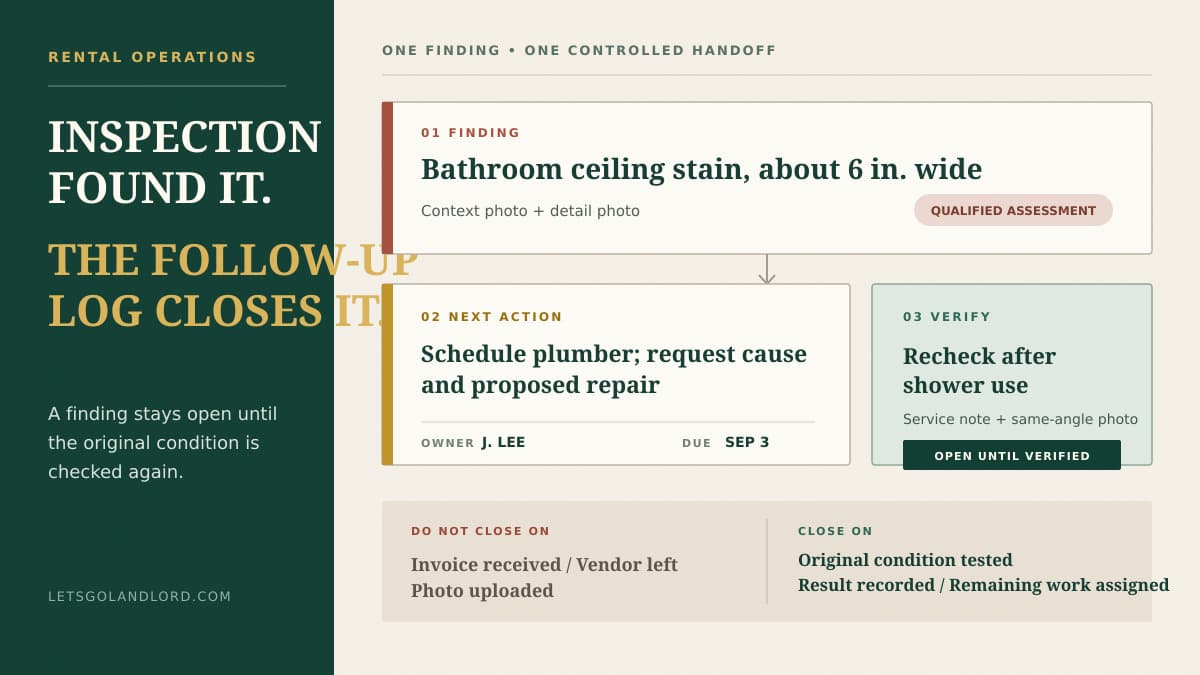
The walkthrough found a loose stair rail, a bathroom stain, and a bedroom window that would not latch. The photos are saved and the inspection is marked complete. Two weeks later, the rail has been repaired, nobody checked the stain again, and the window is still sitting in somebody's text messages.
The inspection record tells you what you saw. The follow-up log tells you what happens next. Build one line for every finding that needs a decision, then carry that line through action, verification, and closure. The useful fields are finding, action, owner, due date, and closure evidence.
Write the finding before deciding the fix
Describe the observed condition, its exact location, the inspection date, and the evidence that supports it. Write "water stain, about six inches wide, on the bathroom ceiling above the tub" instead of "roof leak." The first statement is an observation. The second is a cause that still needs to be confirmed.
Give photographs stable labels that match the log. A useful label names the property, unit, room, item, and date without including tenant names, access codes, or personal details. Keep a wider context photo and a closer detail when both are needed to understand the location. Do not photograph faces, personal papers, medicine, computer screens, or unrelated belongings.
Record the tenant's explanation separately and in their own terms. If they say the stain appeared after the upstairs unit used the shower, preserve that as reported context rather than presenting it as a verified cause. This small distinction keeps the repair brief honest and makes later changes easier to explain.
Give every finding a disposition
Choose what happens next while the walkthrough is fresh. A finding may need urgent action, a routine repair, a qualified assessment, monitoring, a tenant update, no action with a recorded reason, or another inspection under a specific condition. Do not let "not urgent" become the only status. It says nothing about who will revisit the item.
Separate safety and damage control from the final repair. An active leak may require immediate steps to limit water, followed by diagnosis and permanent work. A loose handrail may need access restricted while a qualified person evaluates it. The log should show the temporary measure and the open repair as separate actions so the first response does not hide the unfinished work.
This article provides general operating information, not legal or safety advice. Inspection rights, notice, required repairs, habitability, reporting, retention, privacy, licensing, and response times depend on the property and current local requirements. Use qualified local professionals for legal questions and work outside your competence.
Assign the next action, not the whole problem
Give each open line one named owner and one next due date. The owner is responsible for the next action, not necessarily every step through completion. For the ceiling stain, one person may schedule a plumber by Friday. After the visit, the log can assign the next action to a roofer, upstairs-unit vendor, or the landlord based on what was found.
Write an action that can be completed and checked. "Call someone about window" is too loose. "Schedule a qualified contractor to inspect the bedroom window latch; request cause, proposed repair, and price before work begins" has a finish line. Add the access plan, spending authority, and stop rule when the assignment involves an occupied unit or an uncertain scope.
Set priority from the condition and the risk of waiting, not from how easy the item is to schedule. Active water, electrical concerns, unsafe access, loss of a required service, security problems, and similar conditions need the appropriate prompt response. Cosmetic touch-up can wait without being erased. Record why a lower-priority item is deferred and when it will be reviewed again.
Keep tenant communication on the same timeline
Tell the tenant what was found when the condition affects their unit, use, access, or safety. State the next step you can support, who will contact them, and when they should expect another update. Avoid promising a repair date before a vendor has confirmed it.
Save notices, scheduling messages, tenant replies, vendor arrival changes, and closeout updates with the finding they concern. A separate message thread can be convenient in the moment, but the follow-up log should still show that notice was sent, access was agreed or otherwise handled under the applicable rules, and the tenant received the result.
Do not use a maintenance update to assign blame. An inspection may show damage, wear, misuse, a building failure, or a condition with an uncertain cause. Document the facts and preserve estimates or professional findings before deciding responsibility. Keep any deposit or lease enforcement decision in its proper process.
Verify the result against the original finding
A vendor invoice proves that work was billed. It does not prove the condition is resolved. Compare the closeout evidence with the original finding. Test the window latch, check the repaired rail for movement, or inspect the ceiling after the condition that previously produced moisture. Keep specialized testing with qualified people.
Record the completion date, person who performed the work, what changed, test or observation used to verify it, and any remaining item. Focused after photos can help when they show the same location and angle as the starting evidence. Preserve model numbers, readings, reports, warranties, permits, or inspection results when those documents matter to the repair.
If the result cannot be verified yet, leave the line open. A moisture repair may need another check after rain. A pest treatment may need a scheduled follow-up. A replacement part may be installed while finish work remains. Use a monitoring condition and fallback date instead of marking the item complete because the vendor left.
Review open findings every week
Sort the log by priority and next due date. Look for overdue assignments, findings with no owner, repeated access failures, vendor reports that did not answer the question, and completed work without verification. A short weekly review catches the quiet items that never become emergencies but never get closed either.
Group work when it makes sense, but preserve each finding as its own line. One vendor visit can address three items in the same unit. Each item still needs its own result and evidence. Otherwise a single completed appointment can make unresolved work disappear inside a broad status.
LetsGoLandlord inspections support scheduled, draft, and completed records, property or unit checklists, item conditions, answers, and photos. Use the inspection for the observed condition and evidence, then connect the needed repair or follow-up to the property record that will carry the action. The software keeps the paper trail together. It does not decide the required response or prove a repair was done correctly.
Close the inspection only when the exceptions are clear
The walkthrough itself can be complete while findings remain open. Keep those two statuses separate. Finalizing the inspection should lock in what was observed on that date. The follow-up log should keep showing every unresolved decision, repair, assessment, and monitoring item until it has a recorded outcome.
At closeout, each finding should be resolved, intentionally deferred with a review date, or transferred to another controlled record with a working link. Check that closure evidence is readable, tenant updates were sent where needed, reusable access details were removed, and open work still has an owner.
Keep the original inspection and the follow-up history. Editing the first observation to match the eventual diagnosis destroys the decision trail. A clean record shows what you saw, what you thought needed to happen, what qualified people later found, what changed, and how you verified the result.