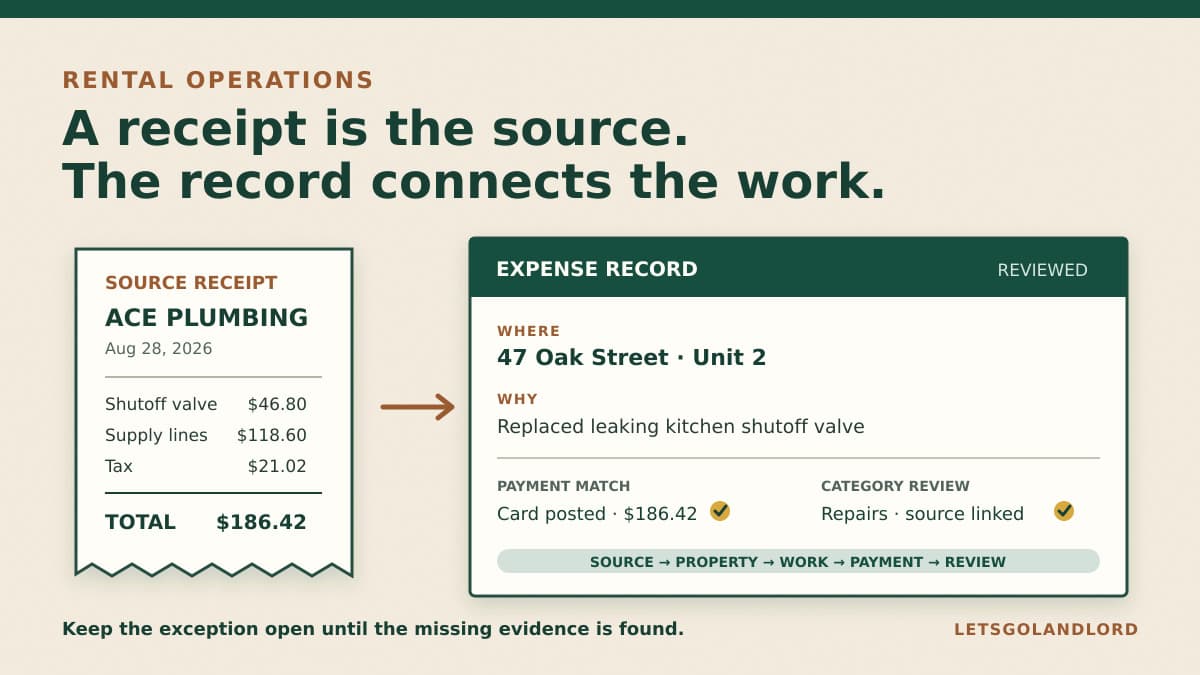
A hardware-store receipt lands in the truck console. It shows $186.42, but not which rental needed the parts, what was repaired, or whether the same purchase was already entered from the bank feed. The paper exists. The expense record does not.
Build the record while the job is still fresh. Connect the source document, property, work performed, payment, ledger entry, and review result. That takes a few minutes now and avoids a much slower reconstruction at month-end or tax time.
Capture the source before it disappears
Photograph or download the complete receipt as soon as practical. Keep the vendor name, transaction date, total, line items, tax, payment method reference, and return information readable. For emailed invoices, save the invoice itself instead of relying on a link that may expire or require an old account login.
Give the file a stable name that can survive outside your inbox, such as "2026-08-28 Ace Plumbing 47 Oak Unit 2 186.42.pdf." Do not put card numbers, account credentials, tenant details, or access codes into the filename. The name should help you match the file without exposing private information.
A card slip alone may show only a total. Keep the itemized receipt or invoice that explains what was purchased. If the vendor's document is vague, add your own note about the work, but do not rewrite the vendor's description as if they supplied details they did not.
Tie the purchase to a property and a job
Record the property and unit when the expense belongs to one location. Then state the work in plain terms: "replaced leaking kitchen shutoff valve in Unit 2" is more useful than "plumbing." Link the cost to the maintenance ticket, turnover item, inspection finding, or improvement project that caused it.
Split mixed purchases while you still remember them. A single checkout may include supplies for two rentals, a portfolio-wide subscription, and something personal. Mark which line belongs where and preserve the math. Do not assign the whole total to the property with the largest share just to make entry faster.
Keep reimbursements and shared costs visible. If a contractor will repay a returned item, an insurer may reimburse part of a loss, or several properties share one service, record the open item and the allocation method. The original payment and the later reimbursement are separate events, not a reason to erase the first record.
Match the expense to the payment
Compare the receipt with the bank or card transaction after it posts. Check the vendor, date, and amount. Dates may differ because a card authorization and final posting happen on different days, but the difference should be explainable. Watch for tips, deposits, credits, refunds, split tenders, and charges that settle for a different amount than the first slip showed.
Use one stable transaction reference or attachment link so the same purchase does not get entered twice. This matters when one person enters the paper receipt and another later reviews an imported bank transaction. A duplicate check should compare more than the amount because two legitimate charges can share the same total.
If the bank shows a charge with no source document, leave it in an exception list. Add the vendor, property, person responsible, and follow-up date. Guessing from a merchant description can turn a missing receipt into a confident but wrong record.
Record facts before choosing tax treatment
Enter the facts you can support: property, date, amount, category, vendor, and memo. Keep the source attached or linked. If your system supports projects or work orders, connect those too. These fields answer what happened without pretending to settle every accounting question.
Be careful with work that may be a repair, improvement, replacement, casualty cost, owner distribution, or mixed-use purchase. The label can affect reporting, and the answer may depend on facts that are not printed on the receipt. Flag uncertain items for review instead of forcing them into the nearest familiar category.
This article provides general recordkeeping information, not tax or accounting advice. Classification, capitalization, depreciation, deductibility, retention, and allocation depend on the facts and current rules. Keep the supporting records and use a qualified tax or accounting professional for treatment that affects a return or financial statement.
Close the loop at month-end
Review every posted outflow for the month and account for each one. A clean review ends with the transaction matched, intentionally excluded with a reason, or left open with an owner and next date. "I will remember that one" is not a useful status.
Check that the ledger amount agrees with the source and bank, the property assignment is correct, the memo explains the work, and any refund or reimbursement is recorded separately. Look for duplicate amounts, round-number estimates entered as final costs, credits without their original charges, and portfolio expenses attached to one property by habit.
Save an export or month-end snapshot after the exceptions are handled. The snapshot should not replace the underlying receipts. It gives you a fixed list to compare with later corrections and helps explain why a report changed after the month was first reviewed.
Use one record from purchase to review
A spreadsheet can handle this workflow if each row has a durable source link and clear review status. Keep the files in a consistent folder structure, limit access, and test that links still work after a file is renamed or moved. A perfect row pointing to a dead attachment is incomplete.
LetsGoLandlord records expenses by property, date, amount, category, vendor, and memo, then groups yearly totals by category and exports them to CSV. Bank-feed outflows can appear as suggestions for review before you accept or dismiss them. Use the source document and job record to check each suggestion rather than treating an imported merchant name as the whole story.
The finished record should let another authorized person answer five questions without calling you: what was bought, where it belongs, why it was needed, how it was paid, and whether it has been reviewed. If one answer is missing, leave the item open while the evidence is still recoverable.