Your plumber is waiting for an answer, a tenant has reported a new problem, and you are somewhere without reliable phone service. A backup contact needs more than a vendor list. They need to know what is already happening, which decisions they can make, and who takes over if they cannot respond.
Prepare a short landlord backup handoff before a vacation, work stretch, or planned absence. Keep one portfolio-level coverage sheet and a small list of open items by property. For a larger portfolio, divide that list among named people so each issue has one responsible contact. Ready.gov recommends defining teams and tasks and testing a business continuity plan. The same discipline is useful when an otherwise routine rental operation depends on one unavailable person.
Agree on coverage before sharing the packet
Confirm that the backup accepts the work and is available for the entire coverage period. Record the start and end time, time zone, properties covered, primary contact method, and second contact if the first person cannot respond. Set a clear escalation path for urgent reports and missed acknowledgments. Avoid a plan that depends on waiting for you to return a call.
Separate receiving a report from authorizing work. Write down which routine actions the backup may take, which require another person's approval, and which remain with a qualified professional. If you authorize spending, specify the work category, limit per incident, who can approve changes, and how payment will be arranged. Do not present a spending cap as permission to delay urgent protective action or a legally required response.
A handoff sheet does not grant legal authority. Before someone manages a property, enters an occupied home, signs documents, collects money, or serves notices for you, confirm the applicable licensing, agency, lease, and local requirements. Leave legal notices, deposit decisions, and lease changes with an appropriately authorized person. A helpful friend is not automatically a lawful substitute for a property manager.
Hand over the next action, not the whole history
List each unresolved issue that could need attention during the absence. Include the property and unit, current condition, last verified update, next action, responsible person, and due time or trigger. Link the source record. Label a tenant report as a report and a vendor finding as a finding. If you do not know whether an appointment is confirmed, say so.
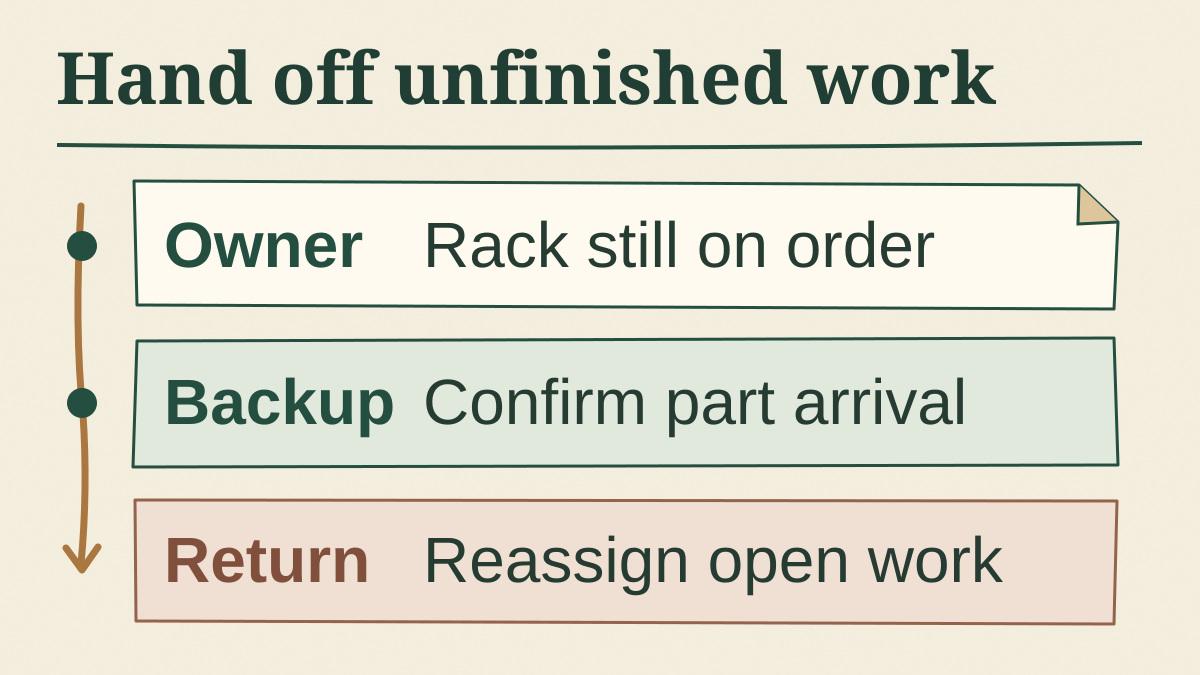
For example, imagine a fictional repair whose urgency has already been assessed: a replacement dishwasher rack is on order. The vendor expects the part Thursday but has not confirmed a visit. The backup's next action is to confirm arrival with the vendor Thursday morning, then agree on a visit with the tenant under the property's entry requirements. If the part is delayed, the backup updates the tenant and records a new follow-up. This is an illustrative coordination check, not a repair deadline or an instruction to postpone a safety response.
An entry can be this short: Property/unit: __. Issue and current condition: __. Last verified update and source: __. Next action: __. Responsible person: __. Due time or trigger: __. Approval boundary: __. Escalation contact: __. Supporting record: __. Ask the backup to acknowledge receipt and flag anything they cannot do.
Check the calendar separately for inspections, move-ins, renewals, and other dated obligations. A quiet maintenance list does not mean nothing is due. The linked lease-audit tool can help extract dates from a lease PDF; check every result against the signed lease, addenda, and applicable requirements before using it in the handoff. Extraction is not a determination of the legal deadline.
Give people enough access to do the job
Share the property details, contact information, and records needed for the assigned work. Do not bundle screening reports, bank details, identity documents, or unrelated tenant files into a general coverage packet. Store access instructions separately from broadly circulated work notes. Use a controlled sharing method and review who can open it.
Do not share your own login. Where a system supports separate accounts with suitable permissions, use those and test the access. If the available role exposes more information than the backup needs, provide a limited handoff through another secure method rather than assuming the role is safe. Never promise that a document link gives someone access until you have checked it with their authorized account.
Tell tenants how to report routine issues during the coverage period and what to do for an emergency. Do not suggest that they wait for a callback in immediate danger; direct them to local emergency services as appropriate. Give vendors the authorized contact and approval boundaries without broadcasting that the owner is away. The operating message matters more than your travel itinerary.
Keep the work visible and test the handoff
Tasks in LetsGoLandlord.com support a due date, optional due time, and notes, and can link to a property, lease, or open maintenance ticket. Use a task for the next check and write the responsible person's name and agreed action in the note. This is a manual handoff, not automatic assignment, permission control, or emergency dispatch. Confirm acceptance directly; creating a task does not establish that another person has seen it.
Before coverage starts, test the handoff with one ordinary example. Ask the backup to find the current record, identify the next action, locate the correct contact, and explain what requires approval. Check that they can open only the material they should see. A short rehearsal often exposes a stale phone number, an inaccessible file, or two people who each thought the other was responsible.
When coverage ends, review every open item together. Record what happened, what was spent or committed, which tenant updates were sent, and what is still waiting. Assign the next action back to a named person and confirm the transfer. Review temporary permissions and access arrangements, remove what is no longer needed, and retain the work history under your recordkeeping policy. Do not delete the only copy of a repair or payment record just because the coverage period is over.
This article provides general operating information, not legal or emergency-response advice. Authority to act for an owner, licensing, entry, notices, privacy, repairs, and record retention depend on the property, circumstances, lease, and current local requirements. Confirm those requirements with qualified local professionals; this checklist does not replace them.