A $1,425 deposit reaches the rental account with a short bank memo and no obvious tenant name. One lease charges $1,425. Another household recently promised to catch up with the same amount. Posting the money to the first plausible balance would make the bank total look right while putting the tenant ledgers at risk.
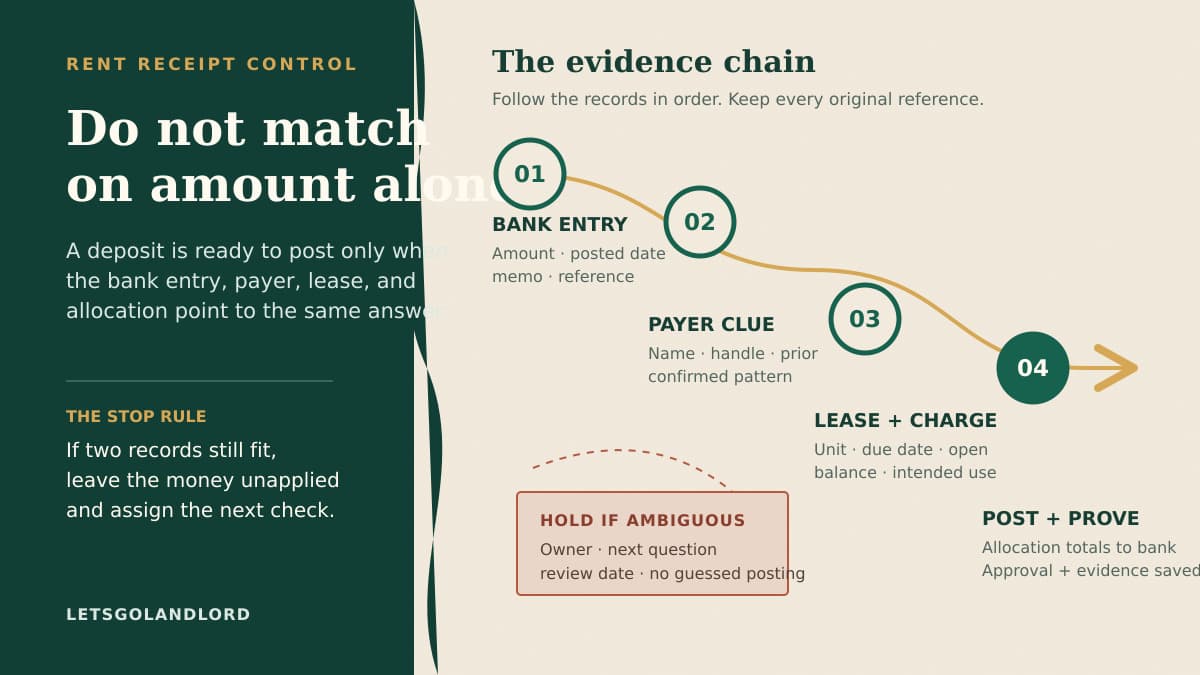
An unmatched deposit is an exception, not missing income. Keep the bank entry intact, collect the evidence around it, and apply it only after the payer, lease, and intended charge agree. The goal is a match another person could retrace from the records you used.
Freeze the bank facts first
Copy the amount, date, payer clue, and bank reference exactly as they appear. Keep the account, transaction type, pending or posted status, and original memo with the same record. Do not rewrite a vague memo into a tenant name before you have confirmed the connection.
Wait for a pending transaction to settle before treating its date or amount as final. A processor may show a temporary description, group several payments, deduct a fee elsewhere, or post on a different day than the tenant initiated payment. Preserve both dates when they answer different questions.
Check whether the entry is actually new money. Transfers between your accounts, returned-payment reversals, processor payouts, refunds, interest, and test deposits can resemble rent when viewed as a positive bank line. Match the bank reference against nearby activity before opening the tenant list.
Build a short candidate list
Search active and recently ended leases for the same amount, then review open charges near the posting date. Add known payer names and payment handles from prior confirmed receipts. A parent, employer, housing program, roommate, or business account may pay for a tenant without placing the tenant's name in the memo.
Keep each candidate tied to evidence: property and unit, leaseholder, expected charge, due date, open balance, prior payment pattern, and the clue that connects the bank entry. A matching amount narrows the list. It does not prove the match.
Look beyond the current month when the amount differs from scheduled rent. The deposit may cover a partial balance, several charges, more than one month, or an old account. It may also belong to no tenant record at all. Leave that possibility open until the evidence rules it out.
Ask one question that separates the candidates
When two candidates remain, identify the smallest missing fact that would settle the match. The useful question may be who sent it, which unit it covers, what date it was initiated, or whether the payment was meant for rent rather than another charge. Record the answer and how it was confirmed.
Do not send a broad message that reveals another tenant's balance, payment amount, or payment history. Contact only the people who need to confirm their own payment, and disclose only the minimum detail needed for that check.
If nobody can confirm the deposit, keep it in the exception queue with an owner and next review date. Do not use a suspense label as a permanent home. The label should make unresolved money visible without turning an assumption into a ledger entry.
Handle split and combined deposits explicitly
One bank line may cover several ledger charges. Write down the allocation before posting it: deposit total, each charge receiving money, and the amount left unapplied. The parts must add back to the bank amount. If they do not, the match is not finished.
The reverse can happen too. One rent obligation may arrive through several deposits from different payers or on different days. Link every bank entry to the same tenant account, but preserve each entry's own amount, date, and reference. Combining them into one invented payment removes the trail you may need later.
Treat fees separately from rent unless your records and current agreement support a specific allocation. A processor payout that is net of a fee should still reconcile to the gross tenant payment and the separate processing cost rather than quietly reducing the receipt.
Post the match with its evidence
Before applying the money, check four agreements: the bank entry is final, the payer connection is supported, the lease or account is the intended destination, and the allocation equals the deposited amount. Record who approved the match, when it was posted, and which evidence resolved the exception.
LetsGoLandlord brings in read-only bank-feed transactions or CSV imports, matches deposits by amount, memo, and history, allocates partial payments, and holds ambiguous items for review. AI can suggest a match with its reasoning, but you choose whether to apply it. Keep the evidence check even when the suggestion looks obvious.
After posting, compare the bank line with the tenant ledger and the property's receipt total. Close the exception only when all three show the same result. If a later reversal or correction arrives, record it as a new event instead of editing the original deposit out of history.
Keep the queue small without forcing matches
Review unmatched deposits on a fixed schedule and sooner when a tenant balance, late notice, owner report, or month-end close depends on the answer. Sort by age and consequence, not by which item seems easiest to guess. A recent ambiguous deposit may need attention before an older low-impact transfer.
Track a few recurring causes: missing payer names, reused payment handles, combined processor payouts, stale lease records, or payments sent to the wrong account. Fixing the intake problem reduces future exceptions. It does not justify weakening the evidence required for today's match.
This article provides general recordkeeping information, not legal, tax, or accounting advice. Payment application, notices, handling of unidentified funds, privacy, and record retention can depend on the lease, payment method, jurisdiction, and facts. Check current requirements and use a qualified professional when a decision affects a tenant account, filing, or legal process.