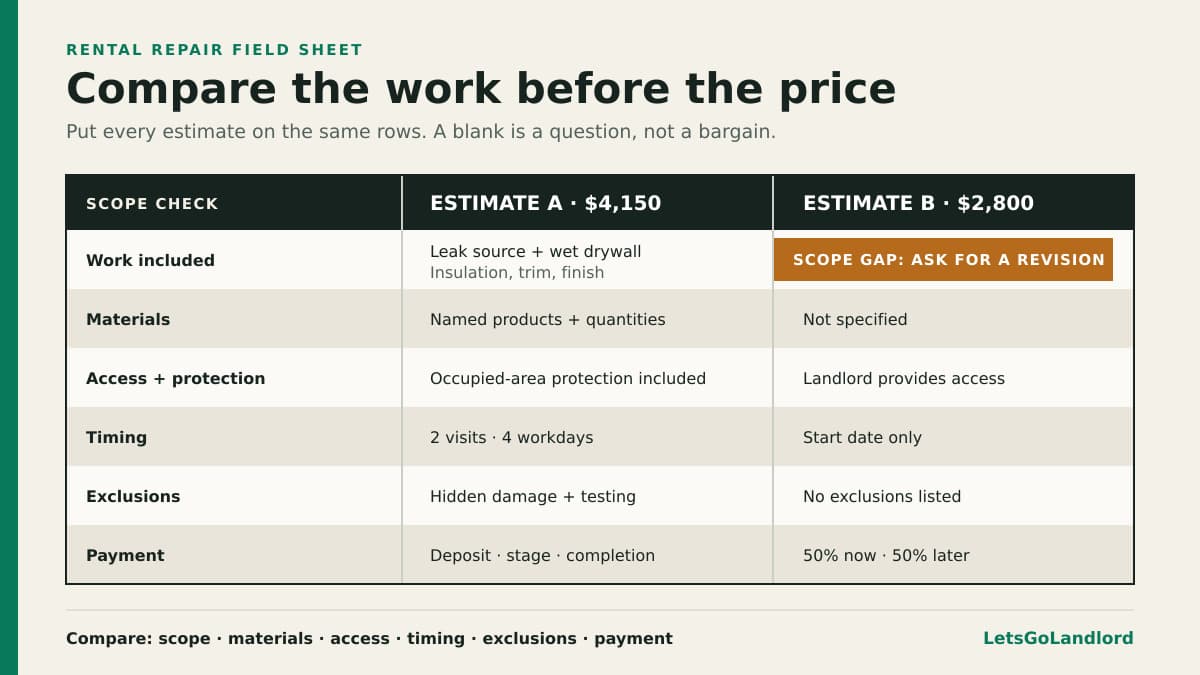
Two contractors look at the same damaged bathroom. One estimate says "repair water damage, $2,800." The other is $4,150 and names the drywall area, insulation, trim, paint, disposal, and two return visits. The first number is lower, but the estimates do not yet describe the same job.
Price matters after the scope is comparable. Before choosing a contractor, turn each scope of work into the same set of questions. You will spot missing work, vague allowances, and timing conflicts while they are still cheap to resolve.
Write one scope of work before collecting prices
Give every bidder the same starting document. Name the property area, the observed problem, known measurements, the result you expect, access limits, and any tenant schedule that affects the work. Include clear photos, but do not diagnose beyond what you know. "Replace the stained ceiling" is different from "find and stop the leak, remove damaged material, dry the cavity, then restore the ceiling."
Separate required work from optional work. If you want a basic repair price and an alternate price for a longer-lasting material, ask for both as separate lines. Otherwise one contractor may quote the basic option while another assumes the upgrade, and the totals will tell you very little.
Ask bidders to note anything they could not inspect. A wall cavity, buried line, roof deck, or occupied room may hide conditions that no reasonable estimate can price precisely. The estimate should say what happens if the concealed condition appears, rather than pretending the uncertainty does not exist.
Normalize each estimate onto one sheet
Create one row for each part of the job: protection and setup, demolition, disposal, repair, materials, finish work, cleanup, permits when applicable, and return visits. Copy each contractor's wording into the right row. Do not improve a vague estimate on the contractor's behalf. A blank row is information you need to clarify.
Record the material specification, not just the material name. Flooring could mean a product line, thickness, wear layer, color, underlayment, transition pieces, and quantity. Paint could mean spot coverage or full-wall coverage. The amount of detail should match the cost and the risk of disagreement.
Allowances deserve their own column. An allowance is money reserved for an item that has not been selected or measured finally. It is not a fixed price for that item. Write down what the allowance covers, how an overage will be approved, and whether unused money reduces the bill.
Compare timing and access as part of the cost
Ask for the earliest start, expected workdays, likely completion date, and the conditions that could move the schedule. A three-day repair spread across three weeks may create more tenant disruption than a four-day repair completed in one visit. If the unit is vacant, an extra week can also delay cleaning, inspection, or leasing.
Name who handles access and communication. Confirm whether the contractor will contact the tenant, whether the landlord must attend, and how much notice is needed for schedule changes. Follow the lease and local access requirements. This is general operating guidance, not legal advice, and it does not replace local advice about entry or notice.
Check cleanup and protection. The estimate should say who moves furniture, protects occupied areas, removes debris, and leaves the work area usable each day. Those details sound minor until one bidder includes them and another sends a change order after work begins.
Read exclusions and payment terms slowly
An exclusion tells you which risk remains yours. Look for permits, testing, hazardous materials, hidden damage, finish matching, landscaping, after-hours work, appliance reconnection, and repair of surfaces opened to reach the problem. You do not need every estimate to include everything. You need to know who owns each omitted task.
Write down the deposit, progress-payment triggers, final-payment condition, and how changes are approved. A calendar date is a weak payment trigger if the corresponding work is not complete. A clearer trigger points to an observable stage, such as materials delivered or rough work inspected where an inspection applies.
Verify licensing, insurance, permit responsibility, and references to the extent appropriate for the trade, location, and size of the job. Requirements differ. Use official state or local lookup tools where they apply, and get qualified local advice when you are unsure what the work requires.
Resolve differences in writing before selecting
Send each bidder a short list of questions tied to the estimate. For example: "Does your price include replacing the wet insulation?" or "Is wall painting limited to the repaired area?" Ask for a revised estimate when the answer changes the scope or price. A text message that contradicts the signed estimate is an invitation to confusion.
Once the scopes match closely enough, compare total price, schedule, communication, relevant experience, payment structure, and the remaining uncertainty. The lowest bid may still be the right one. You should be able to explain why it is lower without guessing.
Keep the estimates you did not choose. They preserve the questions you asked and may help explain why the final cost changed. They also give you a better starting scope the next time similar work appears at another unit.
Keep the estimate with the repair record
After selection, save the accepted scope, changes, photos, schedule, invoices, and completion notes together. Record the final cost separately from the original estimate so you can see the difference. If the repair was supposed to solve a symptom, add a dated check after the next rain, cold spell, appliance cycle, or other condition that can prove the fix held.
In LetsGoLandlord, a vendor record keeps the chosen contractor's trade, company, phone, and email together. The next time you need another estimate, you can start with vendors who have already worked on that kind of job instead of rebuilding the list from old messages.
Keep the estimate, changes, photos, schedule, invoices, and written updates on the maintenance ticket. Record quote questions and changes in that timeline, then move the ticket through scheduled, in progress, and complete. The record keeps the work together. It does not choose the contractor or verify the work for you.
For a repair large enough to change expected cash flow, update the property's operating assumptions after the invoice arrives. That will not decide whether the work is necessary, but it will keep the financial impact visible.