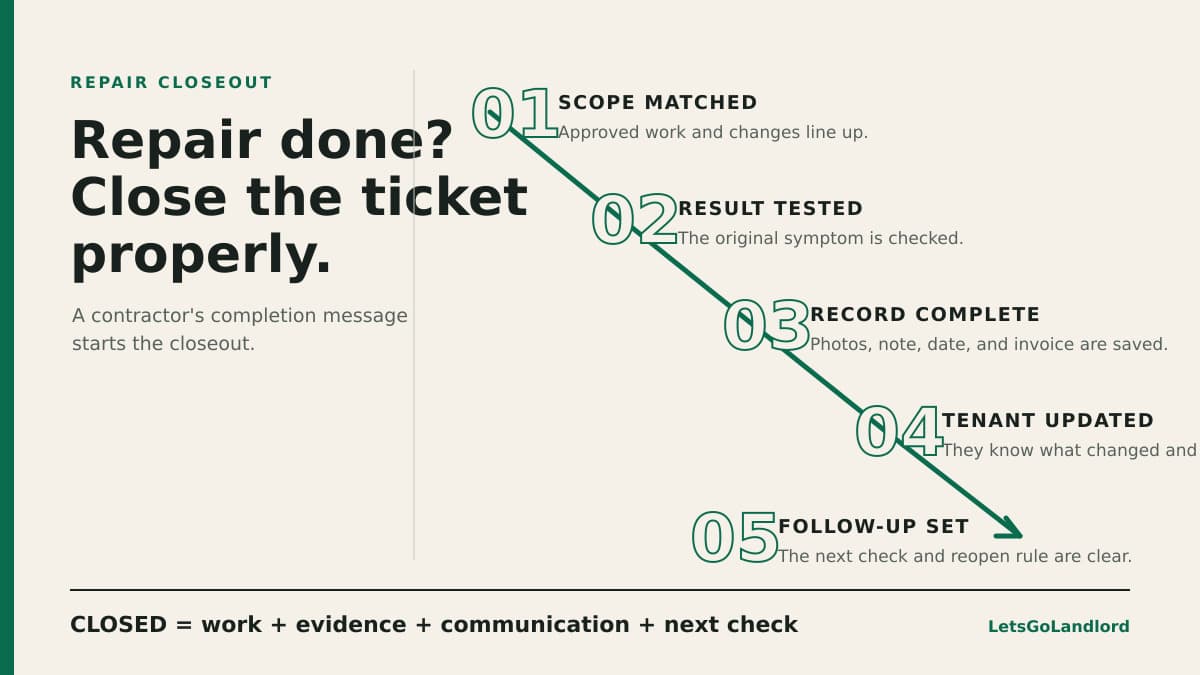
The contractor texts "all done" and sends an invoice. It is tempting to mark the repair complete, pay it, and move on. But the tenant has not heard anything, the finished work has not been checked, and the invoice says less than the original estimate. The wrench may be back in the truck while the ticket is still open in every practical sense.
A closeout is a short control step between "the vendor left" and "the repair is complete." It confirms what was done, preserves the record, tells the tenant what to expect, and catches the jobs that need another visit before they disappear into old messages.
Start with the approved scope, not the invoice total
Put the approved scope beside the vendor's completion note. Check each promised item: the problem to correct, material or part specified, finish work, cleanup, testing, disposal, permit or inspection responsibility when applicable, and any return visit. A paid total cannot tell you whether every line was completed.
Record any change from the scope. Sometimes a change is sensible because the vendor found a different failure or a hidden condition. The record should still say what changed, who approved it, what it cost, and whether it created more work. If the approved repair included patching an access opening and the invoice covers only the plumbing, the plumbing may be complete while the ticket is not.
Do not rewrite a vague invoice yourself. Ask the vendor to identify the work performed, parts or materials used, service date, and any warranty or follow-up terms they provide. Keep their description as the source record. Your notes can add context, but they should not invent details the vendor did not confirm.
Verify the result under the condition that exposed the problem
A repair should be checked against the original symptom. Run water long enough to look for a leak at the repaired connection. Cycle the appliance. Test the outlet with the appropriate safe method. Wait for rain before judging a roof or flashing repair. Check the room after the heating or cooling system has had time to operate. A quick glance at new material is not the same as confirming the reported problem is gone.
Choose who can verify the result. A landlord, employee, qualified vendor, or tenant may be able to confirm a straightforward outcome, depending on the work and the access arrangement. Tenant feedback is useful, but it is not a substitute for professional testing where the repair involves gas, combustion, electrical systems, structure, fire protection, or another specialized risk.
Handle immediate danger before any closeout checklist. Smoke, fire, a suspected gas leak, electrical arcing, active flooding, structural movement, or an injury needs the appropriate emergency, utility, or qualified professional response. This article provides general operating information, not legal, engineering, or safety advice.
Build a completion record someone else can understand
Save a small, complete package: the original request, approved scope, vendor updates, before and after photos, completion date, final invoice, payment status, and verification result. Label photos by room or equipment instead of leaving them as a row of camera filenames. If a serial number, model, meter, or hidden access point matters, include one photo that makes the identifier readable.
Write the closeout note in plain terms: "Replaced the leaking kitchen faucet supply line. Ran hot and cold water for five minutes. No leak observed at the connection. Cabinet base was dry at 3:20 p.m. Recheck tomorrow morning." That is more useful than "fixed" because it names the work, the test, the observation, and the next action.
Keep uncertainty visible. If staining remains but the area needs time to dry, say so. If a part was ordered but not installed, the ticket is waiting on a part. If the repair works but finish work remains, use a punch-list or follow-up status. Closing work that is merely paused makes the next person rebuild the story from scratch.
Tell the tenant what changed and what to watch
Send a short completion update after the work is checked. Name what was repaired, whether normal use can resume, any practical operating instruction the vendor provided, and how to report a recurrence. Avoid asking the tenant to accept technical conclusions they cannot verify. "Please tell us if water appears under the sink again" is clearer than asking them to certify that the plumbing is sound.
If access, cleanup, or personal property still needs attention, say who will handle it and when. A working repair can still leave dust, an open wall, a moved appliance, or a follow-up appointment. Those are part of the tenant's experience and should not vanish when the main task changes status.
Record the tenant update and any reply on the same ticket. In LetsGoLandlord, maintenance requests keep photos, timestamps, status changes, and updates in a full timeline per ticket. That gives the completion message and any later recurrence the same context as the original request instead of splitting the history across inboxes.
Reconcile the cost before the paperwork drifts away
Compare the final invoice with the approved amount and documented changes. Separate the main repair, added work, materials, trip charges, permits, and credits when the invoice provides those details. Resolve duplicate lines, unexplained increases, or missing agreed work before payment becomes the only remaining memory of the job.
Record the expense against the correct property and keep the invoice or receipt with it. Note whether any portion is reimbursable, insured, under a vendor warranty, or tied to a larger improvement project, but do not guess at accounting or tax treatment. Use a qualified professional for classification that affects a return, claim, or financial statement.
Large repairs can change the property's operating picture. Once the actual cost is known, update the assumptions you use for cash flow and return. Leave routine faucet repairs out of that analysis. A major roof, HVAC, plumbing, or turnover bill belongs in the numbers you use to judge the property.
Close with a follow-up date and a reopen rule
Some repairs can close after one successful check. Others need a condition-based follow-up: the next heavy rain, the next full appliance cycle, 24 hours after drying, the next freeze, or a return visit named on the invoice. Put that check on a calendar or task list before closing the ticket. "Watch it" without a date usually means nobody will.
Decide what should reopen the ticket. The original symptom returning, a new leak at the repair, a failed test, missing finish work, or a tenant report tied to the same condition are common triggers. Reopen the existing ticket when the history belongs together. Create a new one when the issue is unrelated, even if it happens in the same room.
Use a final status that tells the truth: complete, waiting on tenant confirmation, follow-up scheduled, warranty callback, or closed with no work after documented review. Weeks later, the closeout should make it obvious whether the problem was repaired, merely quiet, or never checked at all.